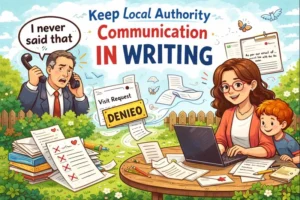
Why Keeping Communication with the Local Authority in Writing Protects Home Educators
One of the strongest pieces of advice we give families at Educational Freedom is simple: keep all communication with the Local Authority (LA) in writing. This is not about being difficult or uncooperative. It is about protecting your family, protecting other home educators, and safeguarding the legal position of home education itself.
Local Authorities are not impartial observers. They are tasked with enforcing government policy, often based on misunderstanding, outdated guidance, or internal targets. Many LAs do not understand home education, and some actively oppose it. Over the years, we have seen repeated examples of LAs misstating the law, exaggerating their powers, and denying things they have previously said. When communication takes place verbally — by phone, video call, or home visit — there is no reliable record of what was said, promised, implied, or threatened.
If an LA officer gives incorrect information verbally, there is no evidence. If they later claim you “agreed” to something you did not, you have no paper trail. If they misrepresent the conversation in their internal notes, their version becomes the official record — not yours. Written communication removes that imbalance. It creates clarity, accountability, and protection.
There is also a wider issue that families often overlook. When individual home educators agree to meetings, visits, or informal “chats”, LAs use this behaviour against other families. We regularly see phrases such as “most families are happy to meet” or “others have no problem with a visit” used to pressure parents who know their rights. Your individual compliance becomes a tool of coercion against the wider community.
This sets a dangerous precedent. If enough families allow informal monitoring, LAs begin to treat it as normal, expected practice — even though it has no legal basis. Over time, this behaviour is used to justify changes in guidance, policy, and eventually legislation. Governments do not introduce new powers in a vacuum; they rely on “evidence” that something is already happening. When families voluntarily give up protections, it becomes easier for the government to argue those protections are unnecessary.
Keeping communication in writing also prevents emotional manipulation. Phone calls and visits allow officers to apply pressure, use tone, urgency, or authority to push families into compliance. Written communication slows this process down. It gives parents time to check the law, seek advice, and respond calmly and accurately.
Let’s be clear: you are not required to accept phone calls, meetings, or home visits. You are entitled to ask for all communication to be in writing. This is lawful, reasonable, and proportionate. It does not mean refusing to engage; it means engaging safely.
Home education remains lawful in England because families have defended it — not by being accommodating, but by being informed, consistent, and firm. Keeping communication in writing is one of the simplest and most effective ways to protect your child, your family, and the future of home education.
If in doubt, put it in writing. Always.
To help with your communications we have various template letters and report writing guide throughout our website depending on which country you are in:
Make sure to find us on social media.
Staffordshire website design and website SEO by Fellowship Studios.