by Gemma Keenan
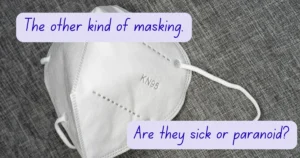
You’ve seen us, or a family like us, on the fringes of the home ed meets, in the quietest parts of the museums, packing in as much outdoor time as we can, we’re jarring to you because we wear respirators (masks), we cause alarm. In your head, you think: COVID, pandemic, or what a bunch of weirdos… You try not to stare, or you do stare, you steer yourself and your kids away from us, as if we’re infectious or as if we wear respirators because we’re paranoid weirdos. But the truth of it is, you’re much more dangerous to us than we could ever be to you, no matter how uncomfortable we make you feel.
We’re the clinically vulnerable families, we have, or have loved ones with, lowered immune systems, chronic illness, life threatening conditions which require constant medical intervention and mean even common infections can have significant consequences. Wearing respirators is what allows us to take part in everyday life as safely as possible.
Most of the time, we quietly manage this ourselves. We plan, assess risk, and adapt so our children can still enjoy rich, social, fulfilling lives. But that often means staying alert—watching for signs of illness, hoping that there won’t be someone hauling a sick kid to the group we just signed up for. Hoping another kid doesn’t make a comment, or exclude our kids from their games. Leaving swiftly when we spot sniffling and hear about someone up all night vomiting. Leaving early, and navigating spaces where we’re not always fully included. If we seem rude, and aloof, know that we are fighting for our lives. Figuratively and literally.
Our children are thriving. They learn, play, make friends, and take part in the same world as yours. But as parents, we notice the looks, the hesitation, the moments where we’re told—gently or otherwise—that we can’t be accommodated, we can’t bring our air filters, people are uncomfortable seeing masked faces, “we don’t have windows that open so we think it’s best you don’t attend” I was told once when my kids wanted to do an activity. “It’s sad we can’t see their faces” I was told at another. Whether it’s about logistics, or discomfort. It is exclusionary can be isolating.
We love home educating, we chose it from the start, long before we became a clinically vulnerable family, before the pandemic, and we do find others like us out there in the wild. We make a bee line for each other, the kids glad to see other masked faces, the parents swapping notes on the weird looks we’re getting that day, finding the humour in it, finding the solidarity.
The home education community is wonderfully diverse. We are part of that diversity too. Our needs may be more visible—masks, air purifiers, questions about ventilation—but they are no less valid than any other access need.
If you organise groups or activities, we ask you to keep families like ours in mind. Small considerations—like openness to mitigations or clear communication—can make a huge difference. Not every family feels able to ask. Some stop trying altogether after difficult, even humiliating experiences, where they’re asked if they’re paranoid, they’re quoted fake science to, as if they’ve made up the mitigations they need, as if they’re conspiracy theorists. Let me tell you, we’d all love to leave the masks and air filters at home, but disability doesn’t care what we want. If we want to stay well, to keep our family well, we have to take precautions.
So if you see us out in the world—at a museum, a group, or a day out – a smile or a hello goes a long way. Treat us as you would anyone else. If you’re curious, approach with kindness rather than damaging assumptions.
We may stand out. But we’re families just like yours, we are simply navigating the world differently.
Make sure to find us on social media.
Staffordshire website design and website SEO by Fellowship Studios.